

Top Producing Wine Regions of The World.
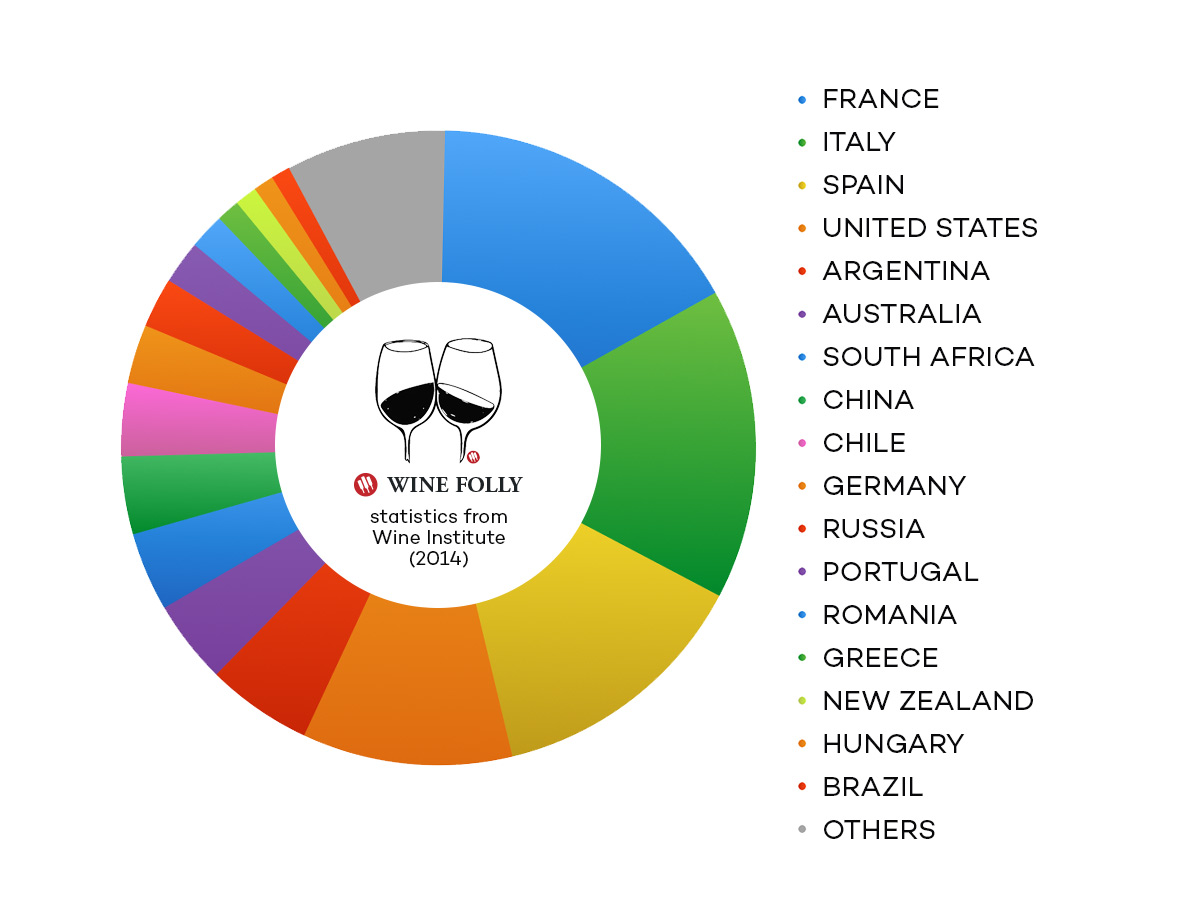
Each year we discover more countries producing wine. For instance, did you know there are vineyards in the Gobi Desert? It’s no doubt that up-and-coming wine regions are intriguing, but just 10 countries are producing 80% of the wine on the planet. Let’s take a closer look at the top wine-producing regions of the world.The top 3 major wine regions of the world are France, Italy, and Spain. They produce almost half of all the wine produced in the world.
Old World vs. New World Wine Regions
What does Old World Wine mean? Find out the differences between New World and Old World wine and how wine making practices and regional climate greatly affect the taste of wine.
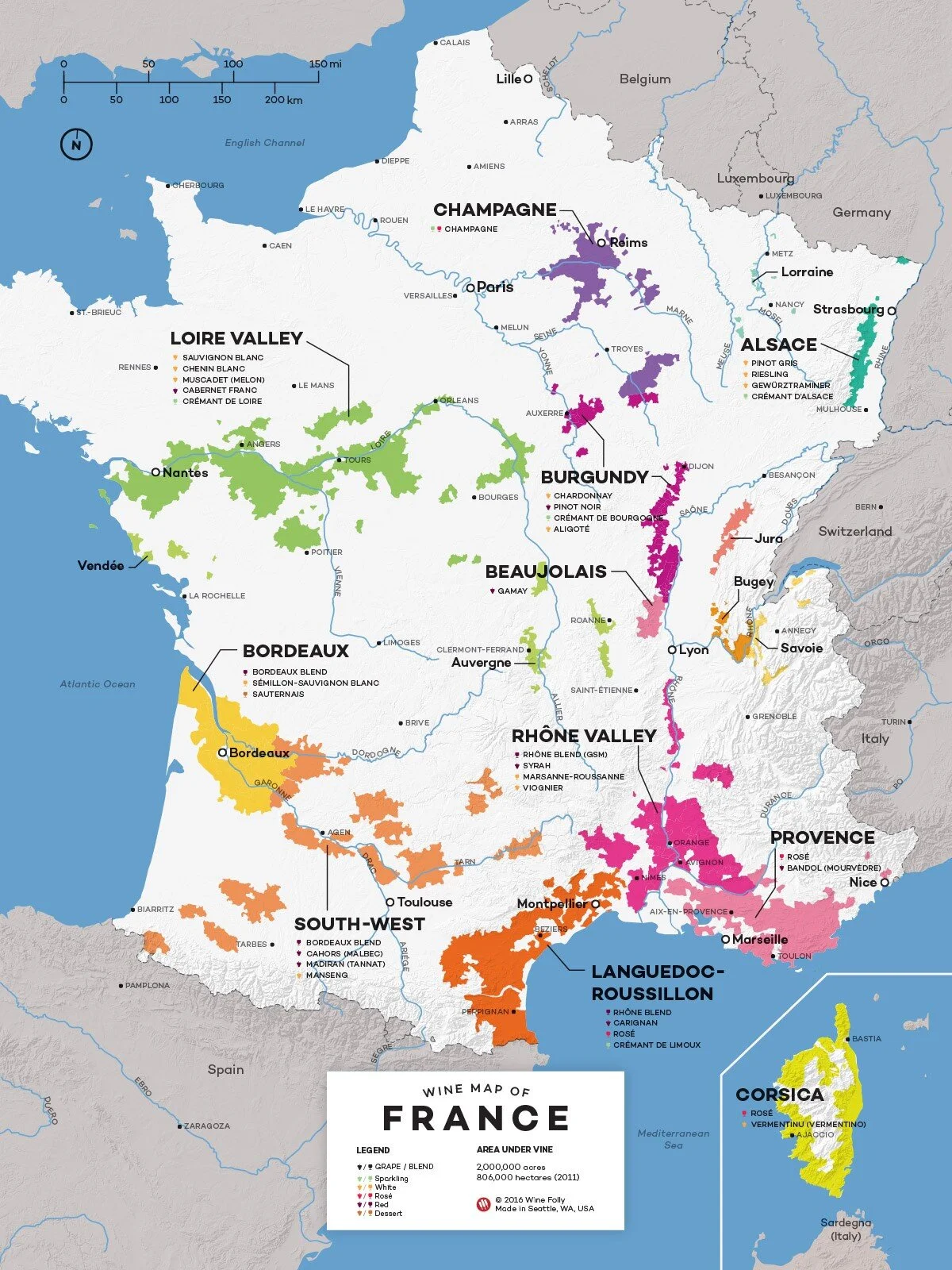
If you drank a new wine each night, it would take 8 years to drink your way through France. So, when you put it all into perspective, France delivers approximately 2,900 different wines, not taking into account the many thousands of wineries.
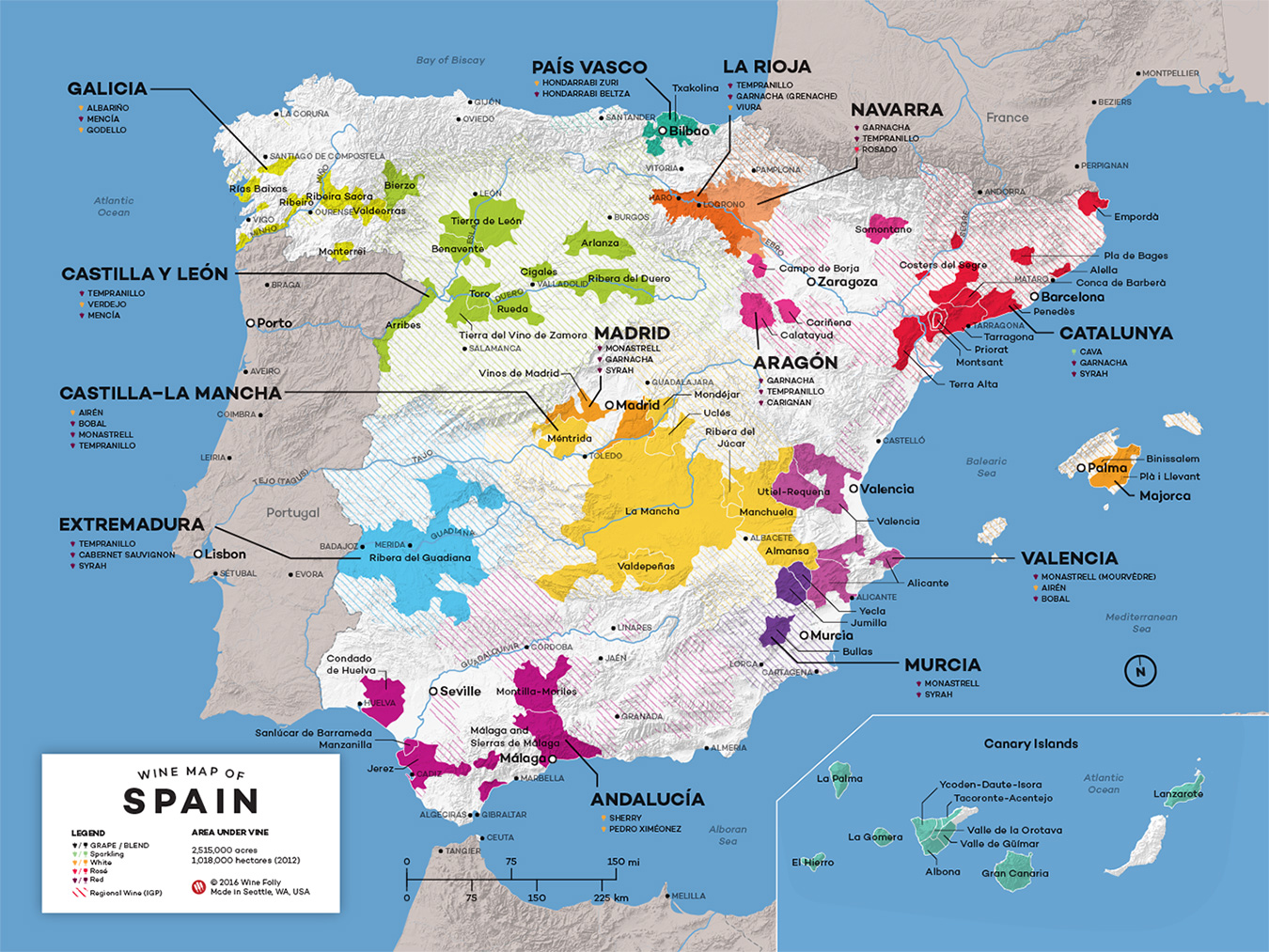
Somehow, Spanish wines continue to fly under the radar. What’s surprising, is Spain is the 3rd largest producer of wine with the largest land area dedicated to vineyards in the world! (2.4 million acres). Spanish wines range the gamut from great values to collectible treasures, and from delicate whites to opulent reds. There are 138 official wine designations in Spain (as of 2020). The regions are incredibly diverse, producing everything from zesty Albariño to inky, black Monastrell. So, the best way to learn about Spanish wine is to break up the country into 7 distinct climates.
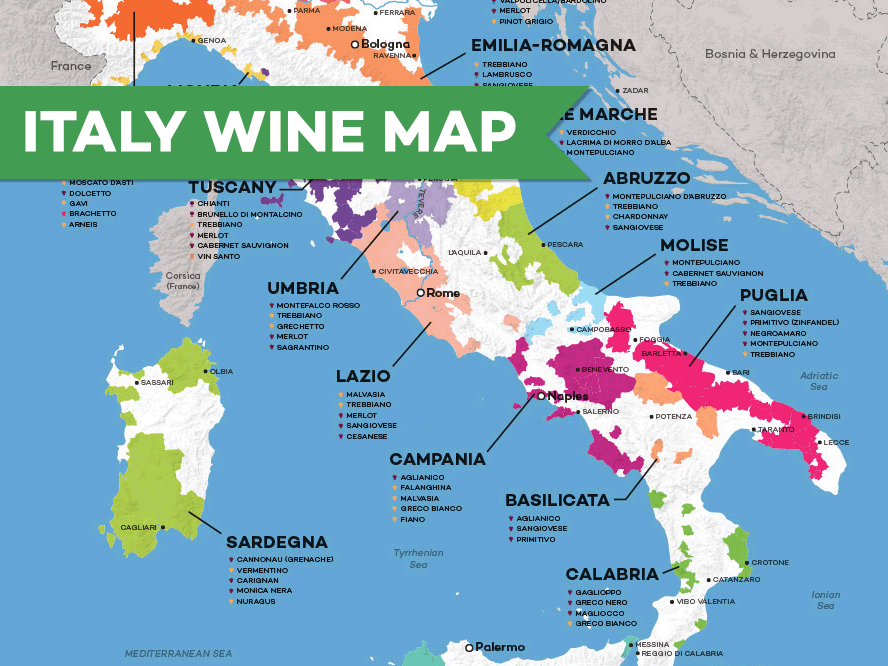
Italian wine is one of the most difficult regions to get to know. Why? Well for one, the Italians use an esoteric wine labeling system, much like the French. But that’s not even the biggest problem in terms of familiarizing yourself with Italian wines. The hardest part is learning all the different grape varieties. At the moment, there are about 350 official Italian wine varieties. There have been rumors that over 2,000 different Italian grapes exist. Italy produces a huge amount of table wine, Vermouth, and cooking wines (such as Marsala). That being said, there are 3 major regions that produce high quality table wines and they are: Veneto, Tuscany, and Piedmont!
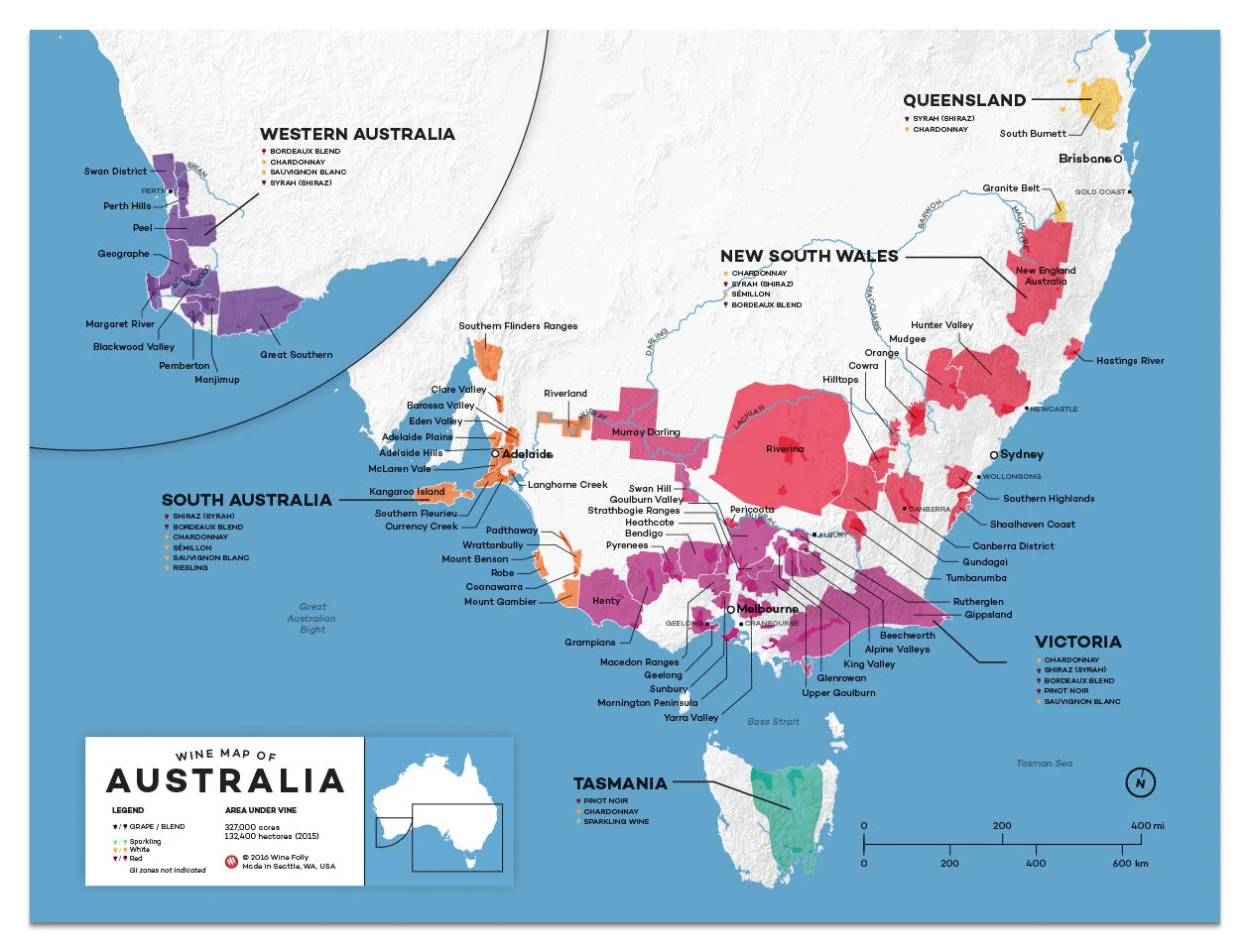
As you might guess, Australia’s main vineyard produce is Shiraz followed by Chardonnay. The two varieties make up 44% of the total wine production. Many of the Chardonnay and Shiraz plantings are being ripped out in favor of Cabernet Sauvignon, Pinot Noir and Sauvignon Blanc. The largest wine production region by far is South Australia. One major city in South Australia is home to the Australian Wine Research Institute (awri). AWRI is responsible for much of the world’s research on dry farming techniques and commercial wine operation. Besides South Australia, there are two up-and-coming wine regions: Western Australia and Victoria.
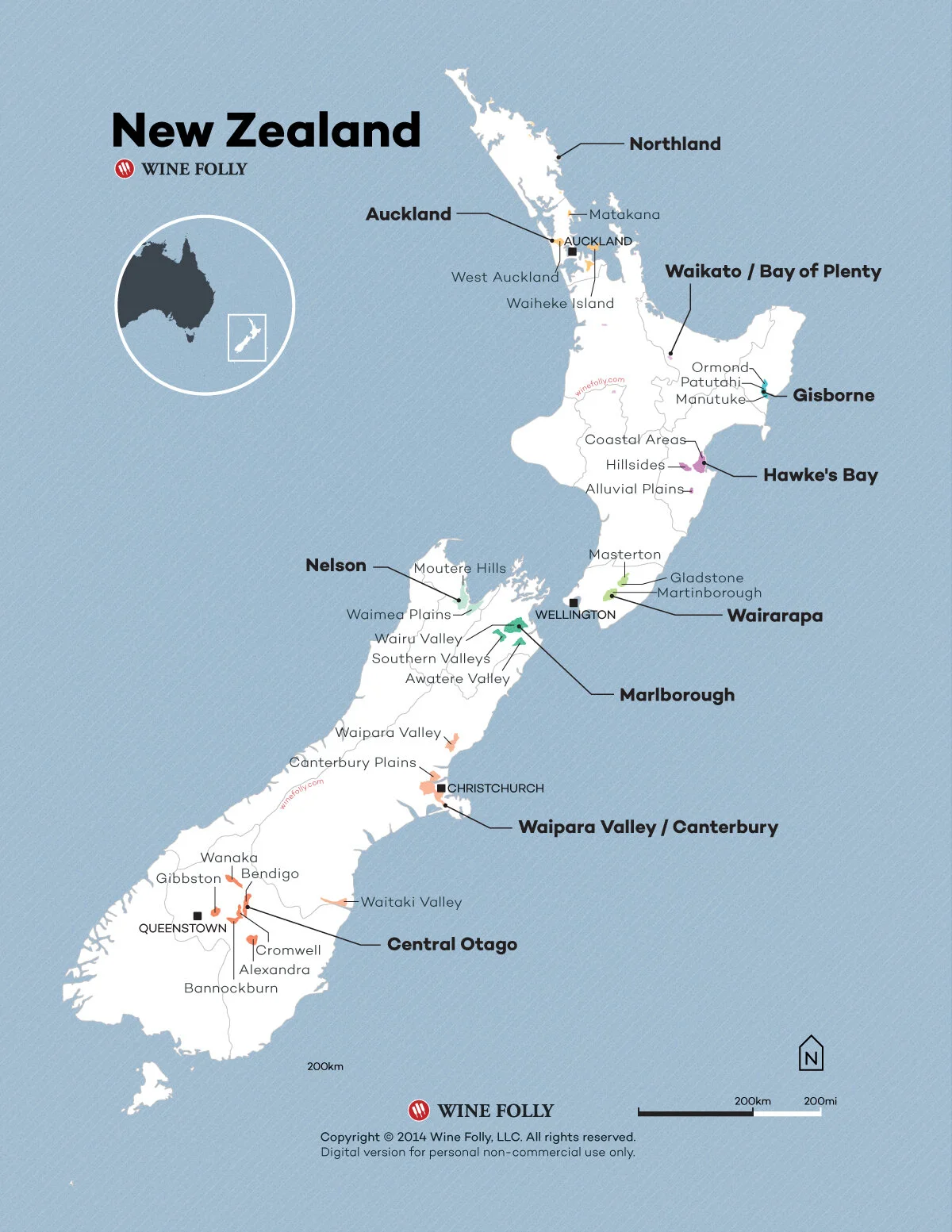
New Zealand wine is distinctive for its purity, vibrancy and intensity. The long ripening period – a result of cool temperatures – allows flavour development whilst retaining fresh acidity, a balance for which New Zealand wines are renowned.
There are a number of distinct major wine-growing regions spread throughout New Zealand, with the majority on the East coast of the Islands in the rain shadow of the mountains. New Zealand is also known as the world’s most Southern grape growing region.
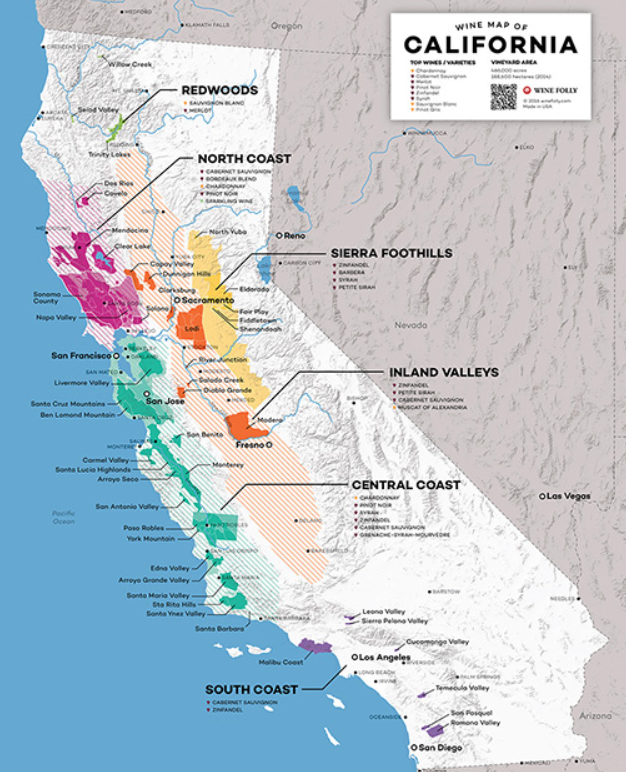
California Wine Regions
What is an AVA?
Every bottle of California wine lists the geographical origin, or appellation, where the grapes were grown. Appellations here are defined either by political boundaries, such as the name of a county, or by federally recognized growing regions, called American Viticultural Areas (AVAs).
For a wine to carry an AVA name on its label, at least 85% of the grapes must be grown in that AVA; for county appellations, that number is 75%. And any wine bearing “California” or any California AVA or appellation guarantees that 100% of the grapes are grown in the Golden State. There are over 1,200 wineries and over 107 AVA’s currently in the state.
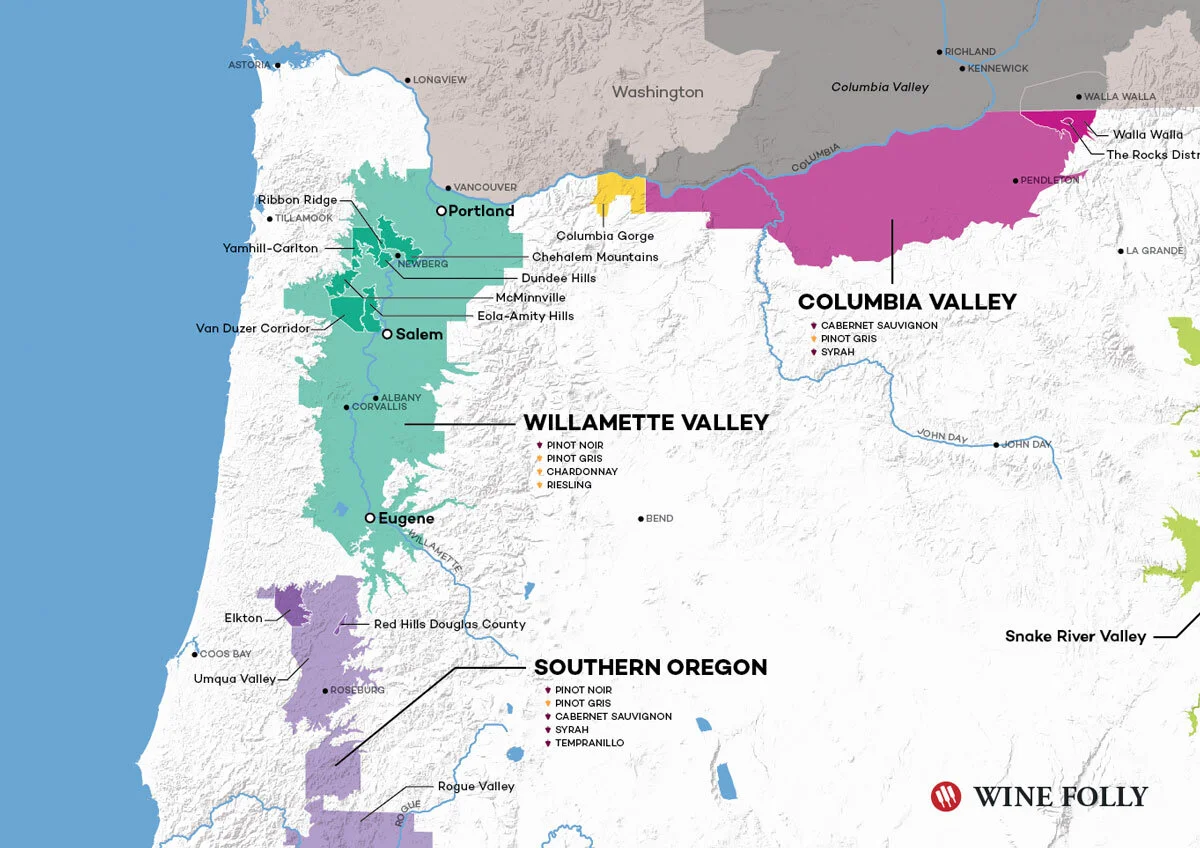
Oregon Wine Regions
Approximately 60% of Oregon’s grape production is Pinot Noir, while Cabernet, Riesling and Chardonnay combined only make up 10%.
The second most widely planted variety after Pinot Noir is Pinot Gris, representing 13% of production.
The long summers are warm and dry, with cool evenings which help to preserve acidity in the grapes. These conditions help to produce the elegant and distinctly ripe character Oregon wines are known for.
AVA: There are seven major growing areas and 18 AVAs, six of which are located in the acclaimed Willamette Valley, which produces 91% of the region’s Pinot Noir and is home to over 500 wineries.
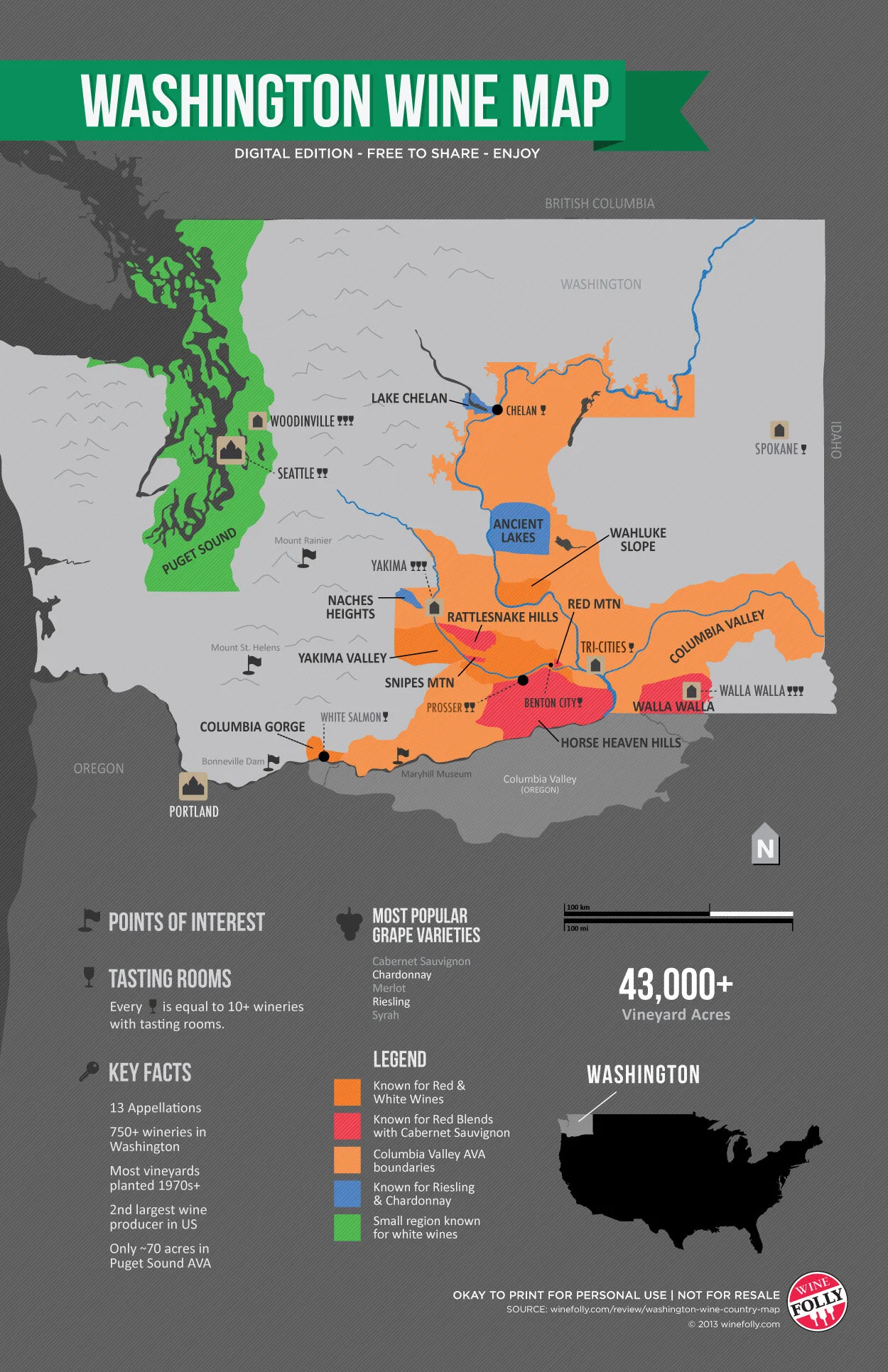
Washington Wine AVAs
Washington State is a premium wine producing region located in the northwest corner of the United States. Although a relatively young wine industry, it is the nation's second largest wine producer and is ranked among the world's top wine regions. Washington wines are found nationally in all 50 states and internationally in more than 40 countries.
With 59,000 acres planted, the state has ideal geography and conditions for growing premium vinifera wine grapes. Primarily grown on their own root stocks, which support healthier plants, vines produce grapes of consistent quality, resulting in strong vintages year after year. While wine grape growers in Washington focus on Riesling, Chardonnay, Cabernet Sauvignon, Merlot and Syrah, the region also produces a wide range of other spectacular white and red wines.
INTERACTIVE AVA MAP
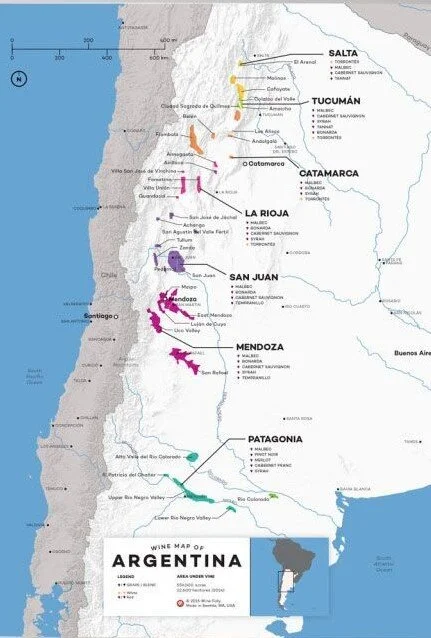
Argentinian Wine
Argentina is one of the most important wine-producing countries in the New World, and the largest producer of wine in South America. The high-altitude deserts of the eastern Andes have given rise to a high-quality wine industry, and the terroir here is well suited to Argentina's adopted grape variety, the ubiquitous Malbec. Originally from Bordeaux, this is now responsible for some of Argentina's most famous wines, which are characteristically bright and intense, with floral notes and flavors of dark fruit.
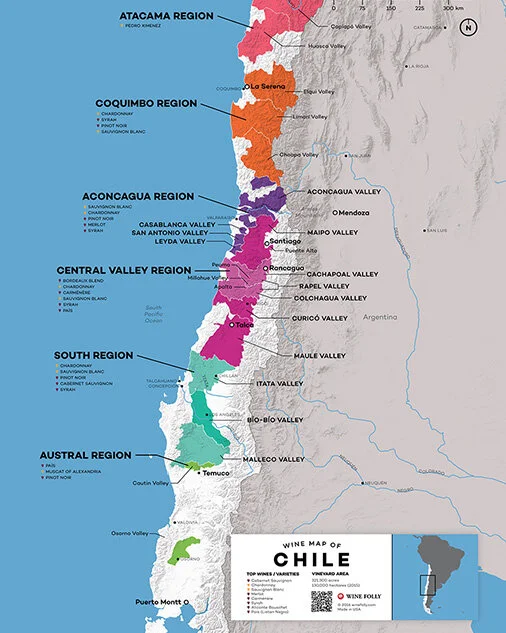
Chilean Wine Regions
Chile was the sixth largest wine producing country in 2015 with a production of about 1,280 million liters (source OIV) and the fifth largest wine exporter.
European grape vines, Vitis Vinifera, arrived with the spanish conquistadors and missionaries around 1555, the variety planted then was País. Is was brought to Mexico by Hernán Cortés in 1520. In the 19th century, french immigrants and investors changed the chilean vineyard with their knowledge, new techniques and new varieties like Cabernet sauvignon, Carmenère, Malbec, Merlot and Sauvignon blanc. An interesting and surprising point, Chile has remained free of Phylloxera.
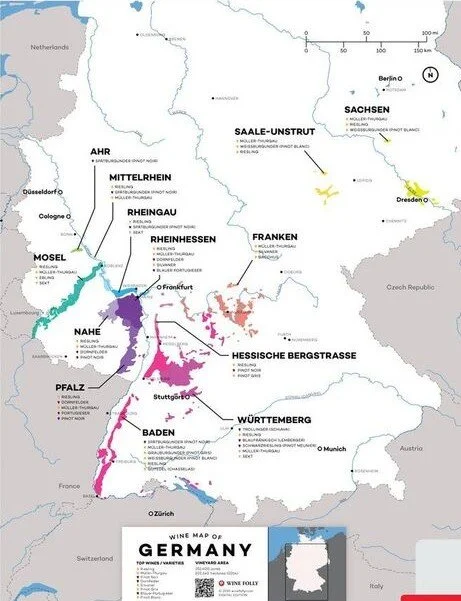
German Wine Regions
Germany’s best vineyards are the world’s northernmost – as far north as grapes can be persuaded to ripen. Many vineyards are on land unfit for normal agriculture; if there were no grapes, it would be forest and bare mountains. All things considered, Germany’s chances of producing some of the world’s best white wines might seem slim.
And yet, the best German wines have a racy elegance that cannot be duplicated anywhere else. The secret is the balance of sugar and acidity. Sugar without acid would be flat; acid without sugar would be undrinkable. In good wines, the two are so finely balanced that they have the certainty of great art.
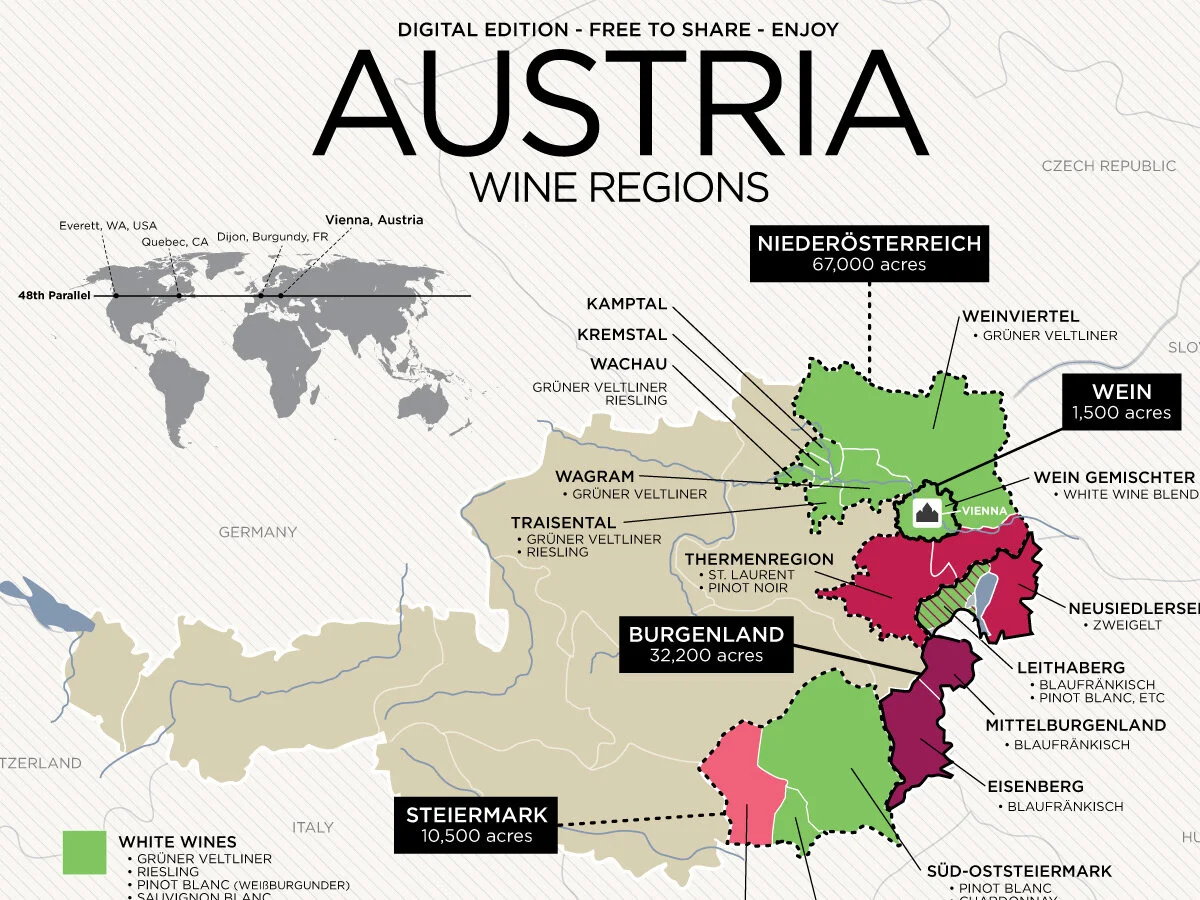
Austria Wine Regions
Austrian wine is for those who like delicately perfumed aromatics and mouth-watering acidity. It makes sense that Austria would grow wines with great elegance and acidity, because the country is on the same parallel as northern France and Canada. Despite being known for white wines, there is also a richer side of Austrian wine found in Blaufränkisch, a red wine variety that can be made very opulent with oak-aging.
There are 35 approved wine varieties in Austria and while that sounds pretty diverse, the majority of Austria’s production is dedicated to Grüner Veltliner, Zweigelt and Blaufränkisch.